


2025 Future Science Prize Laureates




2025 Future Science Prize Laureates
Qiang JI, Xing XU, Zhonghe ZHOU, Zhong FANG, Xi DAI,
Hong DING, Chih-Yuan LU
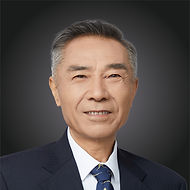
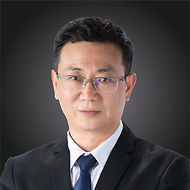
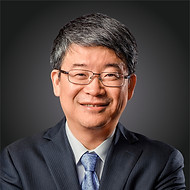
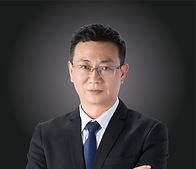
The Future Science Prize committee announced the laureates of 2025 on 6 August. Qiang Ji, Xing Xu and Zhonghe Zhou receive the Future Science Prize in life sciences for their discoveries of fossil evidence for the origin of birds from dinosaurs. Zhong Fang, Xi Dai and Hong Ding receive the Future Science Prize in physical sciences for their contributions to the computational prediction and experimental realization of topological electronic materials. Chih-Yuan Lu receives the Future Science Prize in mathematics and computer science, for his innovations and leadership in advancing non-volatile semiconductor memory technologies, including cell density, device integration, and data resiliency.


Qiang JI

Xing XU
Zhonghe ZHOU
2025 Future Science Prize
Life Science Prize Laureates
For their discoveries of fossil evidence for the origin of birds from dinosaurs.
Qiang JI
was born in Jiangsu, China, in 1951. He graduated from the Department of Geology, Nanjing University.
Xing XU
was born in Xinjiang, China, in 1969. He received his Ph.D. from the Institute of Vertebrate Paleontology
and Paleoanthropology, Chinese Academy of Sciences in 2002.
Zhonghe ZHOU
was born in Jiangsu, China, in 1965. He received his Ph.D. from University of Kansas in 1999.
In 1868, Thomas Huxley proposed that birds originated from dinosaurs, an idea that remained controversial for over a century. In the 1970s, John Ostrom revived this hypothesis, and further proposed that birds evolved from a small coelurosaurian dinosaur. A major breakthrough came in the 1990s when Qiang Ji and the late Piji Chen independently reported the first feathered dinosaur fossils recovered from northeastern China. This discovery was followed by a series of transitional species from dinosaurs to birds unearthed and studied by Xing Xu and Zhonghe Zhou. Through rigorous phylogenetic analyses, anatomical studies, and functional inferences, they established the morphological and functional links between dinosaurs and birds, and provided definitive evidence for birds being an evolutionary branch of theropod dinosaurs. Their work provided definitive evidence that birds are living descendants of theropod dinosaurs and transformed a long-standing debate into a widely accepted scientific theory, reshaping our understanding of vertebrate evolution.
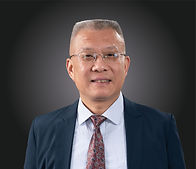
Zhong FANG
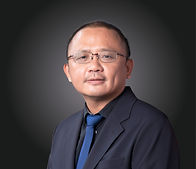
Xi DAI

Hong DIN
2025 Future Science Prize
Physical Science Prize Laureates
For their contributions to the computational prediction and experimental realization of topological electronic materials.
Zhong FANG
was born in Hubei, China, in 1970. He received his Ph.D. from the Huazhong University of Science andTechnology in 1996.
Xi DAI
was born in Zhejiang, China, in 1971. He received his Ph.D. from the Institute of Theoretical Physics, Chinese Academy of Sciences in 1999.
Hong DING
was born in Hunan, China, in 1968. He received his Ph.D. from the University of Illinois at Chicago in 1995.
The discovery of topological electronic materials stands as one of the most significant and exciting advances in condensed matter physics in recent decades. These materials exhibit nontrivial topological properties in their bulk electronic band structures, which give rise to unique conducting surface states that are remarkably robust against perturbations. They unite the abstract mathematical beauty of topology with the practical functionality of electronic materials, opening new avenues for applications in fields such as spintronics, quantum computing, and energy technologies.
Although a variety of topological band structures have been predicted to exist, often through the construction of idealized "toy" models, identifying them in real materials has proven to be a formidable challenge, akin to searching for needles in a haystack. Zhong Fang and Xi Dai pioneered a suite of computational methods that enabled the prediction of a series of topological materials, including topological insulators, quantum anomalous Hall systems, and Weyl semimetals. Hong Ding, meanwhile, played a key role in bridging theory and experiment. Through his innovative use of angle-resolved photoemission spectroscopy (ARPES), he provided the first experimental confirmation of Weyl fermions in the semimetal predicted by Zhong Fang and Xi Dai. Their methods have since been widely adopted by scientists worldwide.
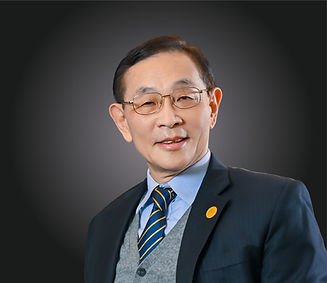
Chih-Yuan LU
2025 Future Science Prize
Mathematics and Computer Science Prize Laureates
For innovations and leadership in advancing non-volatile semiconductor memory technologies, including cell density, device integration, and data resiliency.
Chih-Yuan LU
was born in Guangzhou, China in 1950, and received his Ph.D. in Physics from Columbia University in 1977.
Dr. Chih-Yuan Lu has invented and led the developments of new-generation non-volatile memories (NVM). He and his team pioneered and matured multiple technologies, including high-density 4-bit-per-cell NVM, BE-SONOS devices scaling down to deep nanometer, 3D Single-Gate Vertical Channel structured NVM, high-resiliency memory with on-chip self-annealing, and advanced 3D NOR Flash memories. These breakthroughs have led to new generation products and laid the foundation for the future of NVM technologies, enabling applications across AI, mobile, cloud, and edge computing.
The Future Science Prize is a privately-funded science award initiated by a group of scientists and entrepreneurs. It is established by the Future Science Awards Foundation Limited, which was incorporated in Hong Kong in 2016. The Future Science Prize aims to celebrate the accomplishments of scientists who have made extraordinary scientific contributions. The laureates will be awarded for achievements that:
The laureates will be awarded for achievements that:
1. have made significant global impacts;
2. be original with long-term importance, or have passed the test of time; and
3. be completed mainly in the Chinese Mainland, Hong Kong, Macao, or Taiwan. There is no restriction on the nationalities of laureates.
There are three major categories at present, namely the “Life Science Prize”, the “Physical Science Prize”, and the “Mathematics and Computer Science Prize”, with each award of 1 million US dollars respectively.
The Future Science Prize has been awarded to 46 laureates since 2016. All laureates are highly accomplished, widely recognized scientists whose research has made extraordinary impacts in life sciences, physics, chemistry, mathematics, and computer science.
The 2025 Future Science Prize Week and the Award Ceremony will be held in Hong Kong from 22 to 26 October 2025.